2026 World Cup, Day 29: The European-Brazilian-Argentinian Championships

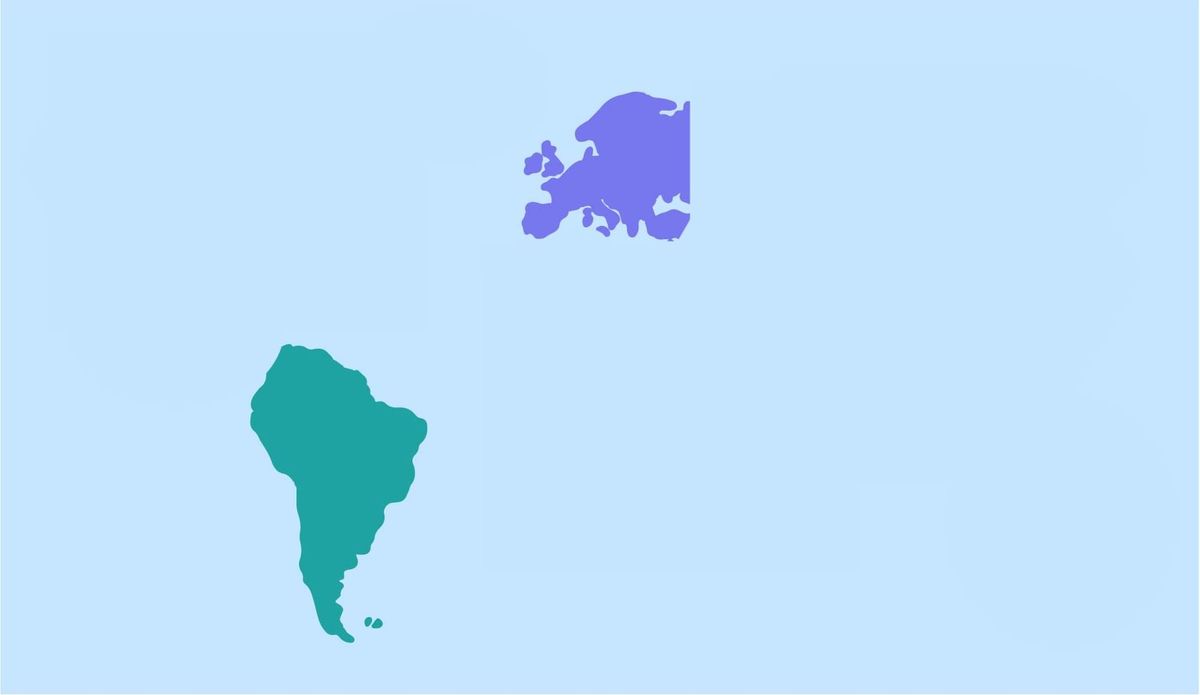
We have reached the quarterfinal stage of the World Cup, which is when it transitions from being a worldwide celebration of soccer to being the European championships, with special guests Brazil and Argentina.
This is the ninth men's World Cup since the fall of the Iron Curtain and the advent of the back-pass rule (choose your own great leap forward), which means there have been 72 spots in the quarterfinals in that period. In all that time, just eleven spots have been occupied by teams outside Europe, Brazil, and Argentina.
Morocco: 2022, 2026
Uruguay: 2010, 2018
Colombia: 2014
Costa Rica: 2014
Paraguay: 2010
Ghana: 2010
South Korea: 2002
USA: 2002
Senegal: 2002
I think it's instructive to look at quarterfinal appearances, because they have a tendency to remove some of the randomness inherent in splitting teams into a bunch of groups. Everybody in the quarterfinals had to get out of the group and win one (or two) knockout-round games to get there. There are very few one-off flukes in the quarters.
I do think it's also worthwhile looking at the USA's struggles through this lens, as well. Yes, the USA failed to make the quarterfinals, when everything was set up for them to do so; they probably will never have a better chance than this.
On the other hand... man, nobody makes the quarterfinals.
Even if you dive into the Europe numbers, nobody makes the quarterfinals. Most of those European appearances come from France (6), Germany (6), England (5), the Netherlands (5), Spain (4), and Italy (3 - though they've also provided a ton of comedy with repeated failures to qualify, in recent years). Outside of those six teams, only Belgium and Croatia have made the final eight more than twice.
Unless you count Morocco's current two-Cup surge, or believe there's something deeper and replicable in the Belgian or Croatian systems, there are basically zero examples to follow. Look at the usual quarterfinal participants, and the clear way forward for the USA is just two simple steps long:
- Put a ton of money into soccer in the country, like an absolute ton.
- For like 100 years.
In some ways, the easy work of American soccer - which seemed hard at the time! - has all been done. The USA now has a functioning top-level soccer league, as well as functioning leagues below the top-level league to further the game. It's got youth development pathways. Colleges play soccer and develop professional players. These things have not always been true in the United States, and this low-hanging fruit has long been American soccer's focus... but those apples have now been picked.
Anything beyond this is just gonna be real spendy. And it's not obvious who would put in that money, or why.
If we're talking incremental stuff, it's easier to understand. MLS needs to re-do its salary rules yesterday, for example, but while I think that improves things in MLS, that's about ten other steps away from making an overall difference.
I wasn't alone in identifying the pay-to-play youth development system as a hindrance, but what I left unsaid in that paragraph is there is nobody with both the money and the incentive to make that happen on a grand scale.
MLS teams run free academies, but that's the proverbial "fill the Grand Canyon with a garden hose" solution, in terms of developing players across America.
It's tempting to believe that some combination of schools and municipalities could fill the void. But think about your local school and your local city council. Do either one of them have enough money to step in and start a free soccer league, with quality coaches at each age level?
If they do, then you probably live in an area that's already quite well-served by soccer clubs, congratulations. And beyond that, we're in "what if a group of lunatic billionaires decide to fund youth soccer leagues across America" territory, and thinking doesn't get more magical than that.
It's not like this is unique to soccer. Youth hockey costs a billion dollars. Youth baseball, the same. Even basketball... just think about the negative connotations of the mere phrase "AAU basketball."
In fact, there's really only one sport in America where it's totally normal to to make the pro ranks while playing for nothing but your school team, where the financial burden isn't partially or entirely on parents and kids, where the money falls from the heavens in great piles.
I think that's what we need, America. To be the kind of country that makes the quarterfinals in the men's World Cup, all we need is for soccer to be as big as football. And here is the sensible, achievable plan to make that happen: