2026 World Cup, Day 26: Off Day

"Oh, he's just having an off day."
This is one of those things that happens in every single sport, and probably every human endeavor. Anyone who's ever bombed a test in school or snapped in a meeting at work knows the feeling. And for the most part, there's no point in searching for a root cause; maybe you didn't sleep well. Maybe a new Call of Duty came out that week. Who knows?
It could have happened to any USA player last night, against Belgium, in the Round of 16. It even happens to them, sometimes, on good nights; Malik Tillman, who scored that iconic free-kick to double the lead against Bosnia-Herzegovina in the round of 32, admitted after the game that - apart from the free kick - he'd played terribly.
The shock, though, is when - as happened to the USA last night - it seems to happen to everyone on the team at once.
The key takeaway of the USA's 4-1 win against Paraguay in the first game of the group stage was not that the USA won, but how they looked doing it. Paraguay, as we subsequently learned, was not a bad team. Apart from that game, they conceded zero goals in the group stage. They beat Germany in the knockouts. Even Kylian Mbappé scored just once against them.
But, especially in the first half, the USA simply overwhelmed Paraguay. The Americans won every 50-50 ball, and when they did, they'd pop out of the duel like a cork out of a bottle and make an inch-perfect progressive pass, springing Folarin Balogun or Weston McKennie or Christian Pulisic, gallivanting towards another scoring chance.
It was intoxicating to watch. It was the type of soccer that you don't see, even out of the best club teams, all that often.
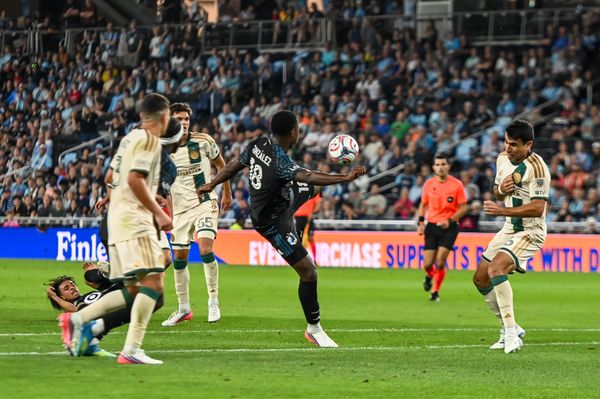
Which made it all the more confusing and horrifying when the USA came out against Belgium and played the exact opposite. They lost every duel for the first 40 minutes of the game, and even when they finally started winning them, their next touch was invariably either a misbegotten dribble that pinged ten yards off a shin, or a pass that headed about 30 degrees off to either side of the intended target.
Nobody came out of it looking good. Pulisic was awful, Balogun was stranded, Sergiño Dest kept running, Wile E. Coyote style, into tunnels that had been painted on cliff faces. Matt Freese made what unfortunately will end up being a career-defining mistake. At least Wondo was offside and the goal probably wouldn't have counted anyway; Freese's legacy will be the moment his brain disconnected in midfield and he lost the ball, forty yards from his goal.
Belgium also did the rudest thing they could have done, which was to identify the USA's flaws (Dest's defending, Tim Ream's athleticism) and exploit them. Much of the story about Belgium was that the visitors left Jérémy Doku and Kevin De Bruyne on the bench; the FOX broadcast was at pains to remind viewers that the Belgians, even as they built a lead, still had plenty of firepower left in their dugout.
My reading of the situation, though, was that Rudi Garcia had finally figured out what might actually work for his team. After all, they were pretty hopeless when I saw them draw with Egypt, and had been stuck in a quagmire the entire tournament with all three players on the field (apart from their field day against an overmatched New Zealand). They'd been just as bad against Senegal until Garcia hauled off Doku and De Bruyne with a little more than a half-hour to go. Not starting the two against the USA was less a flex and more a tactical move to free them from the paralysis that had afflicted them for much of the tournament.
But the story we're going to remember about the USA and Belgium was not a story about tactics or lineups.
Sunday and Monday will have to go down as some of the strangest off-field days in U.S. Soccer history. Early Sunday, FIFA announced it was suspending Balogun's mandatory one-game suspension for his red card against Bosnia, which seemed both justified (it shouldn't have been a red card) and confusing (we'd been told repeatedly that there was no way for U.S. Soccer to appeal).
It was immediately clear that FIFA wasn't going to come out of this looking good, just as it did when they'd invented a reason to not suspend Cristiano Ronaldo for this tournament. But FIFA never looks good. It seems to be their self-assigned role to make sure that they never, ever do the right thing for the right reason.
The only hope was that U.S. Soccer wouldn't come out of it looking bad. But as the details trickled out, that hope died, too.
I suppose the best possible reading of the situation - and it's not good! - is that are too many lawyers at U.S. Soccer. Apparently, they threatened FIFA with a lawsuit if Balogun couldn't play against Belgium, and FIFA capitulated. So far, so normal, in the sense that "there was a lawsuit" is the seemingly the endgame for pretty much everything that happens in American life.
What made it worse, though, was the involvement of the President of the United States, in his free time outside of his chosen work of going after kindergartners. About this, I can find no better summary than this Matt Doyle post.
It made for an exhausting couple of days. The highlight was probably when Belgium wanted to appeal FIFA's decision, and FIFA informed them that A) they could not appeal, B) asking to appeal counted as an appeal, and C) their appeal was denied.
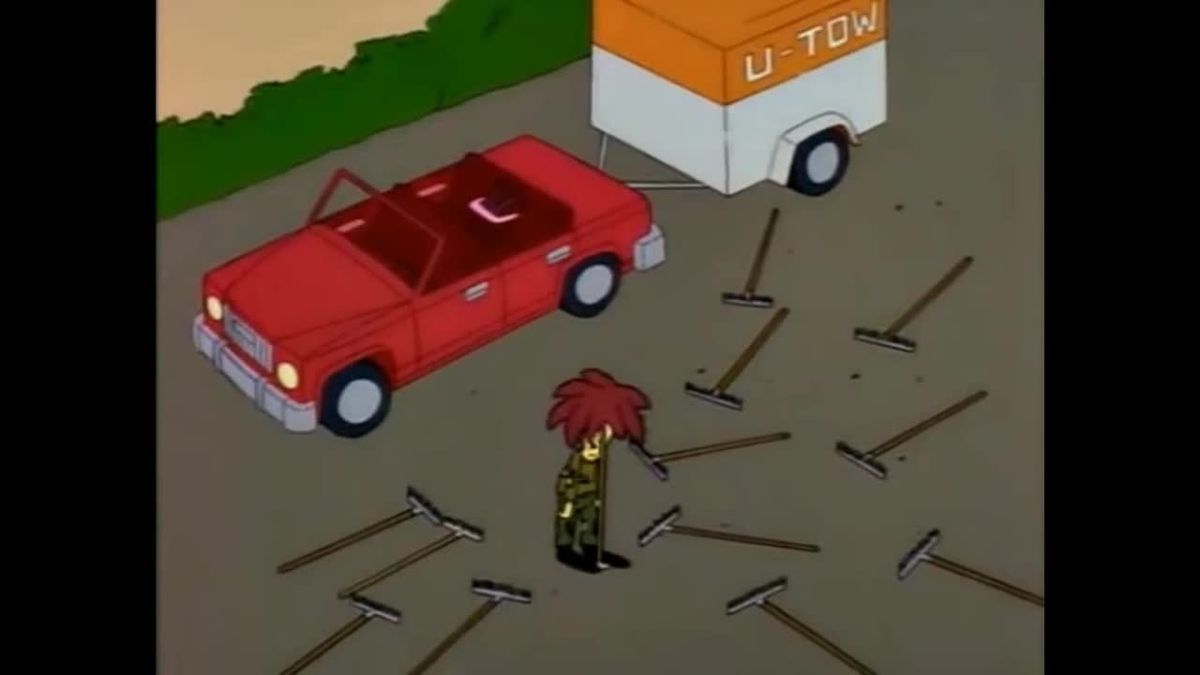
I doubt anyone in the USA camp ever wished that they hadn't even bothered asking if Balogun could play; after all, Balogun is far and away the best striker on the team. But watching the USA blunder around the field in the first half, eleven Sideshow Bobs in a field of rakes, it was impossible not to think: is Ricardo Pepi so bad that it was worth this?
Every time the USA loses in the World Cup (or, in the 2018 version, fails to qualify for the World Cup), it usually prompts a collective soul-searching amongst the American soccer community. What went wrong? What needs to change? What are we doing? Why, in short, are we not good enough?
I am not at all sure you can get very far with this, in 2026. The question this morning is not "Why are we not good enough?" but "Why were we not good enough, last night?"
What we want, collectively, is to find something that's going to make this latest face-plant just a step on a larger journey. To make this the inflection point for a larger change that, in retrospect, seems obvious. We need MLS teams to start their own academies! We need our best players to play in big-time leagues! We need to do a better job of recruiting dual nationals!
I'm not saying there aren't things that could help, chiefly (in my mind) figuring out ways for all American kids, not just rich American kids, to play as much soccer as they'd like. But those things have been true forever, and don't have easy solutions, and anyway any benefit from them would not be felt for decades.
I don't think there's any larger reason here, no overarching narrative to this loss.
Sometimes, it's just an off day.